

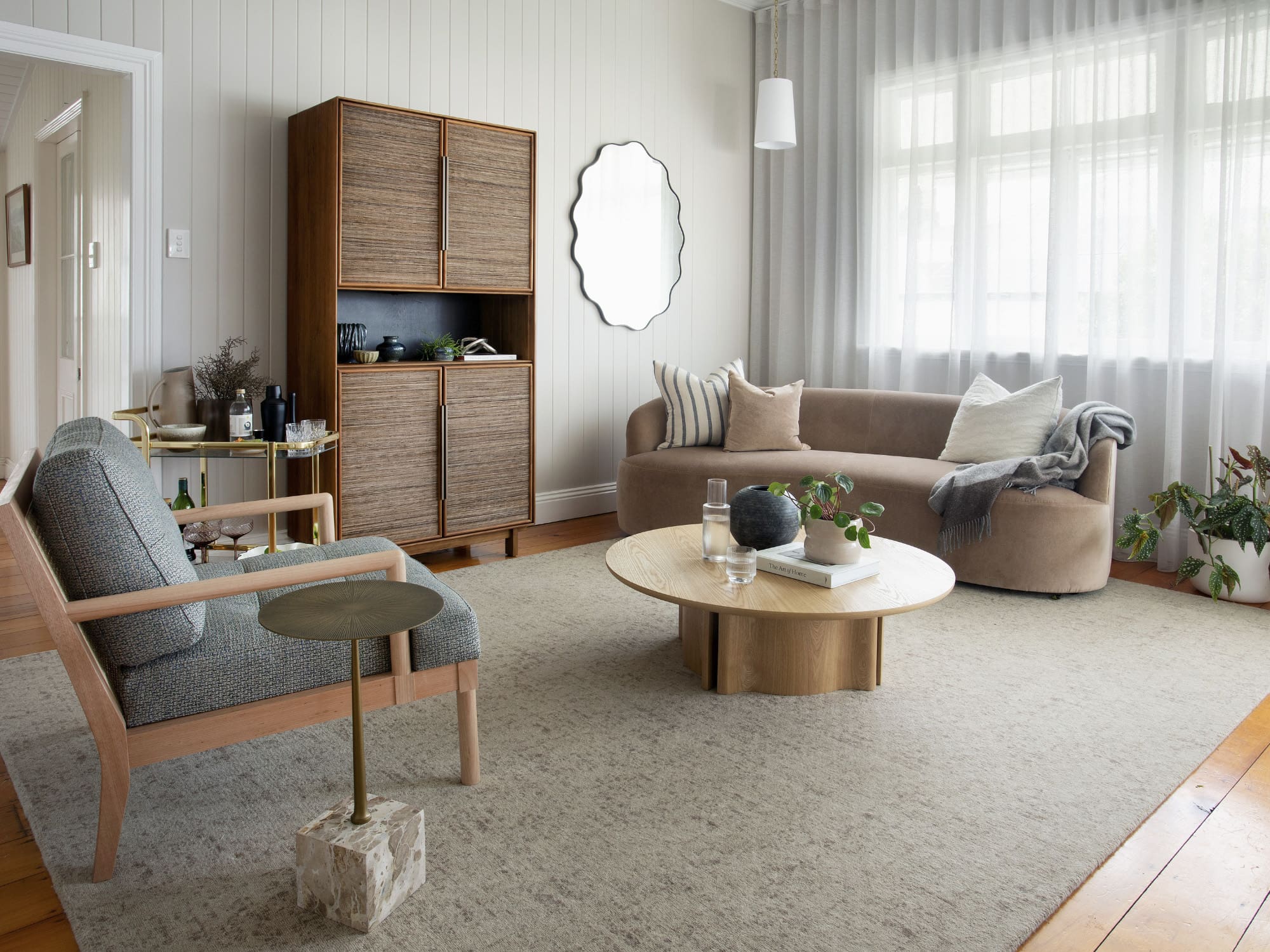
Why Do Some Spaces Just Work?
You know the ones. They feel cool, they feel modern but comfy, and they feel like they belong to those who live there.
As an Interior Stylist, I spend a lot of time walking through spaces all over Brisbane and lately I have found myself asking the same question: why does this room look the way it does? The answer almost always comes back to the same four things.
A room isn’t just a collection of furniture and decor. It’s a system.
When every element is doing its job, a space looks considered and completely right. When one part of that system is off, even slightly, you notice it. You just can’t always name it.
So let’s name it.
01. FOUNDATION: the bones
Your largest pieces, like the sofa, bed and dining table, set the scale for everything that follows. Before you fall in love with something in a showroom, the first step of the design process is pretty basic but very crucial – check the dimensions and map it out at home first. Even a rough sketch on paper can save a very expensive mistake later down the track.
A room built on the right foundation will always come together. Get this wrong and it will always feel off no matter how much stuff you add in.
02. PALETTE: the language
A cohesive palette doesn’t mean everything matches. It means everything belongs. Think of it as a quiet conversation happening across the room. When it’s working, you don’t notice it. You just feel at ease.
Most palette problems come down to too many competing voices: too many colours, finishes and styles trying to share one space and all the attention. Refining down to a few base colours and a couple of accents can bring harmony whilst still being interesting.
03. LAYERS: the depth
This is the seasoning to your space! Rugs, cushions, throws, art, lighting. These are the additions that take a room from furnished to finished. Most people either skip this step or add too many of the wrong things. Layering is an edit as much as it’s an addition.
A well-placed rug anchors a whole furniture grouping. The right lamp changes a room entirely. These aren’t afterthoughts. They’re the finish line.
04. Edit: the discipline
A step often missed but one that can take your space from good to confident and refined – is editing. Knowing what to remove is just as important as knowing what to add. This is where most people hesitate, and where the biggest shifts happen. A properly edited room looks calm and intentional. Everything in it has earned its place.
If your space isn’t landing the way you want, start here. What would you take out if you had permission?
Putting it together
If a room feels like it’s missing something, run it through the four steps above. Is the foundation right for the space? Are there too many colours or textures fighting for attention? Are the layers intentional and telling your story? And have you edited – try taking out just one item and see what happens.
Space planning and decorating should never be done in isolation, and you don’t need to second-guess every decision on your own. Why not consider my Meraki Styling Guide? I’ll help you get a clear vision for your space and a set of design principles to guide the look, feel and direction of your home, you’ll have a strong foundation for every decision that follows. You’ll receive a tailored design direction board and colour palette personalised to your style, along with recommended materials and finishes so you can make your selections with confidence. To finish, I’ll share a curated list of my top five places to shop, chosen to suit your style and budget.
If this is something that sounds perfect for you, I would love to hear from you. Reach out here and let’s get connected.
I hope your home feels like your favourite place to be.
October 30, 2026

